
A machine learning algorithm has been developed to automatically detect and characterise the melting plateau of a self-validating thermocouple [1].
In ThermoSI (WP4) the algorithm is being refined to ensure it is robust in a wide range of different circumstances, and a web app is being developed to make it accessible to stakeholders. This is invaluable for the exploitation of self-validating thermocouples; the aim of the software it to enable autonomous self-validation.
[1] A machine learning approach to automation and uncertainty evaluation for self-validating thermocouples, S. Bilson, A. Thompson, D. Tucker, J. Pearce, AIP Conf. Proc. 3230, 090011 (2024) https://doi.org/10.1063/5.0235318)
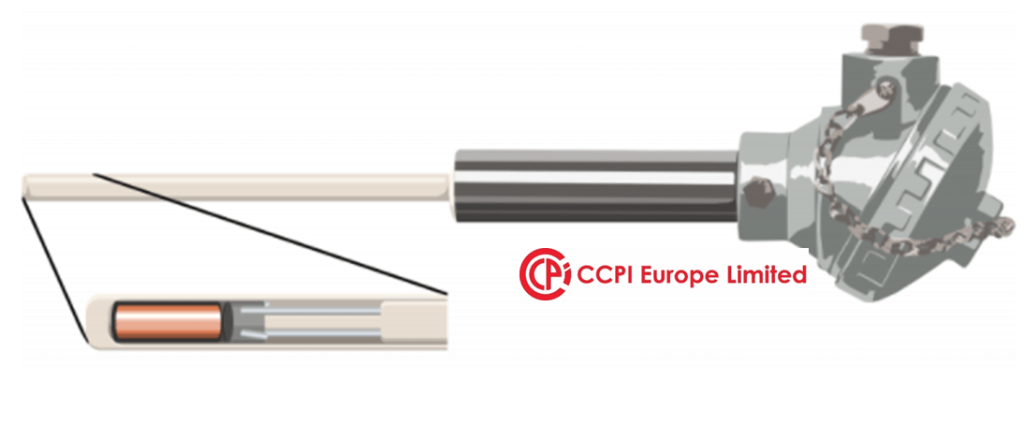
The self-validating thermocouple, tradename INSEVA (jointly developed by NPL and CCPI) is represented in the above schematic. It makes use of a miniature phase-change cell which melts when the temperature passes through the melting temperature, causing a ‘hesitation’ or ‘melting plateau’ in the thermocouple reading; at this point the temperature is known and the thermocouple can be re-calibrated in situ https://ccpi-europe.com/2021/09/27/is-there-a-thermocouple-drift-solution/

Screenshots of the web app under development are included above. Left: individual self-calibration points from the self-validating thermocouple. Right: example melting curve of the self-validating thermocouple; horizontal bars show the melting point determined by the machine learning algorithm (solid line) and the uncertainty (k = 2, 95% probability coverage).
For further information, please contact: Jonathan Pearce (jonathan.pearce@npl.co.uk)


 23IND11 ThermoSI
Leave a comment